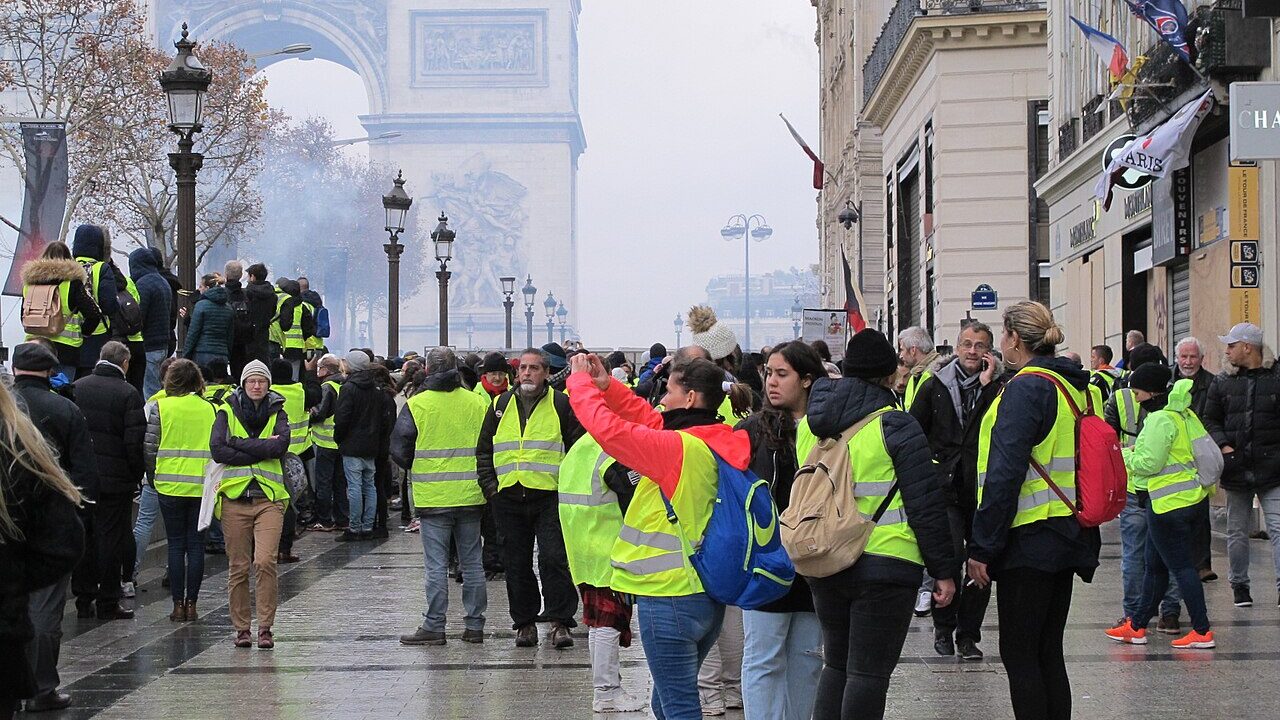
Behind France’s rioters pay bill is a bill of a different kind: the cost of unrest, measured in broken shops, burned buildings and insurance claims, and estimated at over 1 billion euros for the October unrest alone. That cost, and who should pay it, is the argument at the heart of a law that would make people in violent crowds pay up to 10,000 euros for damage, including through deductions from benefits.
The Senate passed the bill 229 to 105 this week, after unrest in mid October that saw nearly 2,400 people arrested in a single weekend, thousands of shops looted or damaged, and fire gut the 19th century city hall in Limoges. Those are not abstract numbers. A looted shop is a business that may not reopen, a burned city hall is a public building that must be rebuilt with public money, and an arrested protester is a person whose life is changed by a criminal record, even if they did not break a window themselves.
The over 1 billion euros damage estimate, reported in coverage of the Senate vote, does not include the full cost of policing, of court cases, or of lost business in areas where shops closed for days, or where tourists stayed away. It also does not include the cost of the 2023 riots, after which insurers paid 793 million euros on 16,400 claims, according to France Assureurs, a figure that shows how quickly riot damage accumulates, and how long it takes to repair.
Who pays now, and who would pay under the bill
Currently, riot damage is paid, in the first instance, by shopkeepers, homeowners and local authorities, through insurance, savings and public budgets, and by taxpayers, through the cost of policing and rebuilding. Insurers cover part of the loss, but not all of it, and small businesses without comprehensive cover, or with high excesses, can be wiped out by a single night of looting. Local authorities, which must repair public buildings and streets, face budgets that were already tight before the unrest.
The bill would shift part of that cost to people who knowingly join a group preparing violence, or who knowingly stay after police order a violent crowd to disperse, by making them liable for up to 10,000 euros for what others in the group destroy, with deductions from family allowances, housing aid and other benefits after a final court ruling. Supporters argue that this shift is fair, because people who choose to join a violent crowd should bear the cost of the violence they enable. Critics argue that it is unfair, because it makes a person pay for damage caused by strangers, and because deductions from benefits fall hardest on the poorest families.
The Limoges test
Limoges, where fire gutted the 19th century city hall, has become a symbol of the damage debate, because a city hall is not a shop, but a public building that belongs to everyone, and its destruction is felt as an attack on a community, not just on a property. Rebuilding it will cost public money, take years, and require decisions about whether to restore it as it was, or to build something new. Those decisions, and their cost, will be borne by taxpayers, unless the bill’s liability provisions are applied to people convicted in connection with the unrest there.
Whether the bill becomes law depends on the National Assembly, where no bloc holds a majority, and where members will weigh the cost of damage against the cost to civil liberties. But whatever the Assembly decides, the damage itself will remain, in Limoges, in looted shops, and in insurance claims, as a reminder that protest, when it turns violent, has a price, and that someone, in the end, must pay it.